
Building Classroom Review Games in Under 30 Minutes
Building Classroom Review Games in Under 30 Minutes
Teachers plan on a tight time constraint and review activities are typically ones that are eliminated when time is running low. Sadly, that’s not where retention sticks, as students that actively recall material they just learned will remember much more than those who jump to the next topic without revisiting. It’s never been if review games work, it’s if a teacher has time to create one.
An ai game builder makes that time just about insignificant. A teacher can explain the topic, grade level, and format desired and have a working review game prepared before the next class meeting begins; no need to do the lesson-planning the weekend before.
What a 30-Minute Build Actually Looks Like
First, clearly describe your topic and audience to the AI game agent, Boo: the content, the concepts to be reinforced and the grade or skill level of your students. On the other hand, the first draft is much more useful here: rather than “math game”, it’s about “fifth-grade fractions, focused on comparing unlike denominators.
After the first build, don’t build, but use the rest of the time in the no-code editor to verify accuracy and tweak difficulty. This review/ adjust cycle remains under half an hour even with a full class full of content to cover.
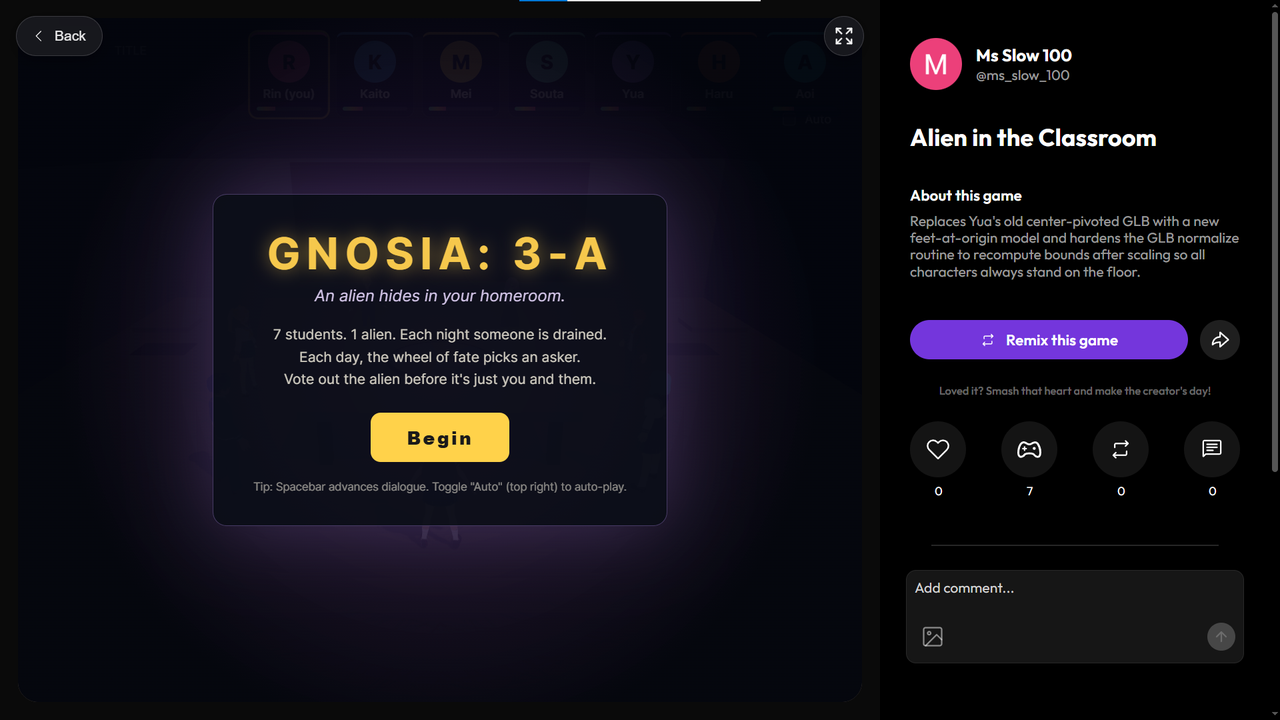
Formats That Work Well for Fast Classroom Builds
A game show format that is familiar to the students, such as a Jeopardy game maker build, will often work great for a review session as the students can grasp the rules of the game outright and won’t need to be introduced to a new format. For a lighter, faster warm-up activity, a bingo game maker style build can turn a vocabulary or fact list into an engaging five-minute activity with almost no setup.
Building Once, Reusing Across Sections
One build of the review game can be used for multiple class periods with the same content, no need to rebuild multiple times. One of the underused time-savers: the thirty minutes spent creating the game can be shared throughout every section that you teach that content. A 3d game maker online build is reusable when appropriate, such as in subjects where a more visual and exploratory activity seems to be more appropriate, like Geography or Science.
Fixing Mistakes Without Losing the Whole Session
If you notice a mistake on a question that has been generated during class, in case you are not getting the right answer key, a confusing question prompt, or any other issue, you might be able to correct it in real time without stopping the activity, as the changes happen instantly (not requiring a republish and wait cycle). Such flexibility in-the-moment can be very helpful for teachers who do not always have the time to review content prior to presenting it to students.
Making It Accessible for Every Student
Published games are accessible via a browser link without downloading, and students can access a review game from any computer, phone or iPad in the classroom without any differences. Nobody is being excluded from the classroom due to a lack of the correct app on their device, as that consistency is important in a classroom where some students may have an iPad and others may have a Chromebook.
Involving Students in Building, Not Just Playing
For older students, even better than letting them play the review game the teacher created is for them to make their own. Making a game about a topic necessitates a level of cognitive activity that is greater than just answering questions passively: understanding the topic well enough to turn it into questions and challenges for others. A 30 minute classroom block that is scheduled for a student-created review game can also be used as a review period and a comprehension check as the quality of a student’s questions may indicate how well he or she comprehended the content.
This building exercise can also serve as a mini assessment that allows a teacher to see what areas he/she is missing and not have to give a formal test.
A simple question game, even when designed by a class of student-designed questions, that students play around the same table for a few minutes, tends to bring up misunderstandings earlier than a similar quiz does, because they have to think things out when they design the questions but don’t necessarily have to think them out when they answer them.
Teachers who have attempted this report back that the questions students pose actually indicate a much deeper knowledge of the material than a typical test would, just because writing a good question demands knowledge of the material from multiple perspectives.
Why Speed Changes What Teachers Actually Do
If the review game requires a 30 minute period, instead of a weekend, then it is not a special occasion activity but something a teacher can do before the majority of lessons that deserve it. It’s not so much about any one big event or program, but about little things done regularly over a school year that make a difference.